
Table of Contents
Related Articles
Theater and Performing Arts Safety: Protecting Your Technical and Production Staff
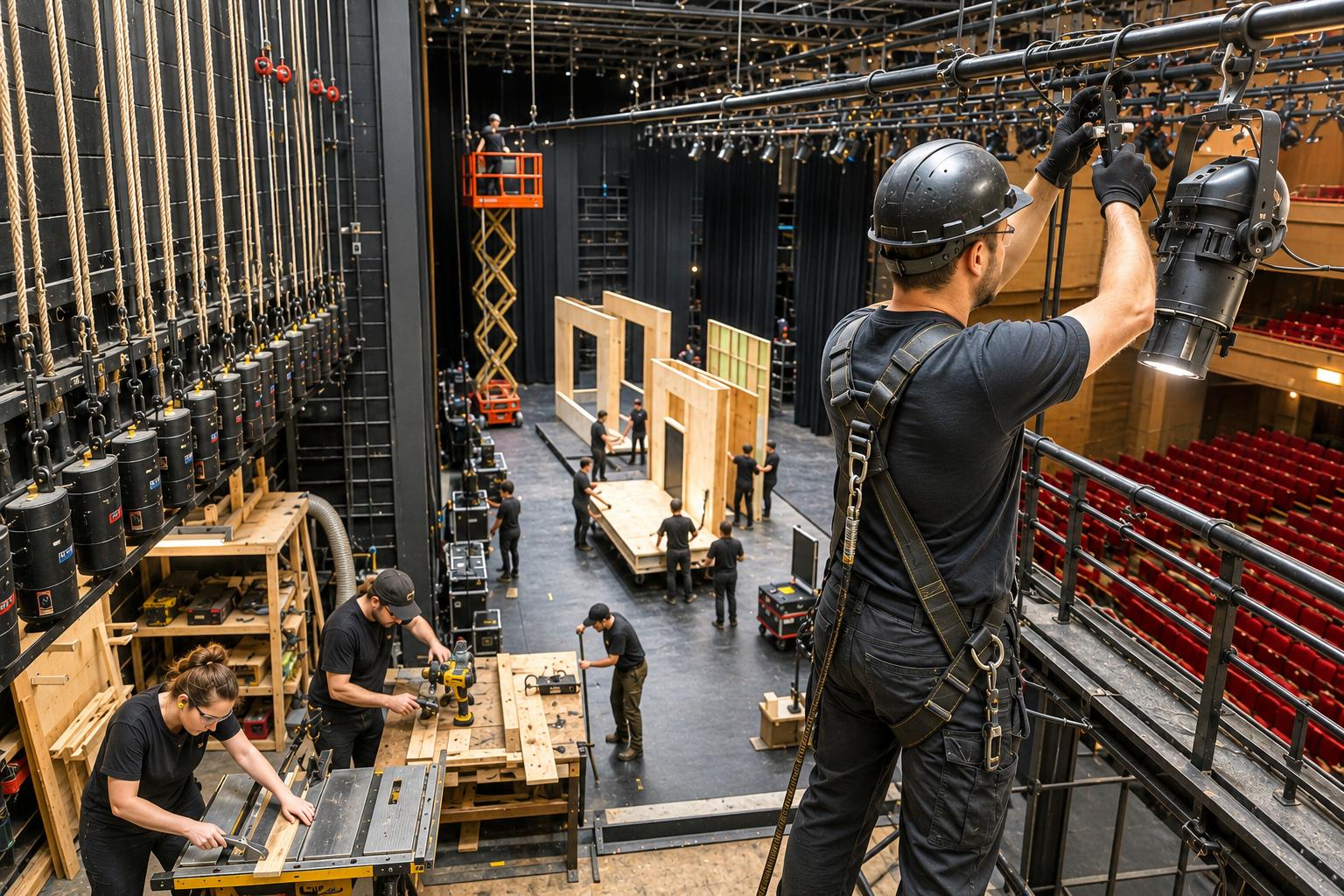
The technical staff who run your theater and performing arts programs work in one of the most hazard-rich environments on your entire campus. They climb to catwalks, operate counterweight rigging, build sets with power tools, hang lighting from heights, and move heavy equipment under tight production deadlines. When something goes wrong in this setting, the consequences can be severe.
Most safety conversations about theaters focus on students and audiences. Your employees deserve the same attention. The stagehands, technical directors, lighting technicians, and scene shop staff who make productions happen carry real injury risk every time they walk into the space, and those injuries translate directly into workers compensation claims.
Where the Real Hazards Live
Theater work combines several high-risk activities that rarely appear together anywhere else. Understanding these exposures helps you target prevention where it matters.
Rigging and Fly Systems
Counterweight fly systems represent the single most dangerous element in any theater. These systems use ropes, pulleys, and heavy steel weights to raise and lower battens loaded with scenery and lighting. The failure of a rigging system can have catastrophic consequences, and the suspension of loads over people is considered a high-risk activity.
A loading error, a worn cable, or an unbalanced arbor can send hundreds of pounds crashing toward the stage. Your fly operators and the crew working below them depend on properly maintained equipment and rigorous procedures.
Key protections:
- Operation, maintenance, and repair of rigging equipment should be done only by properly trained and qualified persons who understand safe use, routine maintenance, and emergency procedures
- Inspect all rigging equipment before use, after any alterations, and at regular scheduled intervals
- Enclose counterweights with a secured guard that prevents anyone from passing underneath
- Remove damaged or defective ropes and slings from service immediately, and never shorten chains or ropes by knotting them
- Confirm that no load exceeds the safe capacity of the system
Working at Height
Catwalks, grids, ladders, and personnel lifts put your staff well above the stage floor on a routine basis. Falls from these heights cause some of the most serious injuries in the building. Lighting technicians focusing instruments, riggers accessing the grid, and crew members adjusting equipment all spend time where a single misstep carries major consequences.
Require fall protection for staff working at height, train everyone on proper ladder and lift use, and make sure personnel lifts are operated only by trained employees. Catwalks need secure railings and toe boards, and access points should stay controlled.
Scene Shop and Construction Work
Building sets means table saws, power drills, nail guns, and other equipment that cause lacerations, amputations, and eye injuries when used improperly or rushed. Costume and prop work brings its own hazards through sewing machines, power scissors, cutting devices, and steam irons.
Your scene shop staff need machine guards in place, proper eye and hand protection, dust collection systems, and enough time to work safely rather than racing a production deadline.
Manual Handling and Load-In Pressure
During load in and load out, additional crew members are often needed because of the volume of work that must be completed in a short time span. This compressed schedule is where strains, sprains, and crush injuries spike. Staff lift heavy scenery, move equipment, and work long hours under deadline pressure.
Plan adequate staffing for load-in and strike periods, enforce team lifting for heavy items, and resist the temptation to let exhausted crews push through fatigue.
Why This Matters for Your Bottom Line
Theater injuries tend toward the severe end of the spectrum. A fall from a catwalk, a rigging failure, or a table saw amputation produces costly claims, extended time away from work, and lasting impact on your experience modification rate. These are not minor first aid situations.
The compressed nature of production schedules compounds the risk. Tech week and load-in concentrate dangerous work into intense periods when fatigue runs high and shortcuts feel tempting. A reliable safety program accounts for these pressure points rather than assuming staff will simply be careful.
Building a Theater Safety Program
Training That Matches the Work
General safety training does not prepare someone to operate a counterweight fly system. Your technical staff need instruction specific to the equipment they use and the tasks they perform. Riggers need rigging training, lift operators need lift certification, and shop staff need machine-specific instruction.
Document this training, repeat it when equipment or procedures change, and never assume that experience alone makes someone qualified to train others.
Inspection and Maintenance Schedules
Theater equipment wears out, and worn equipment kills. Establish a schedule for professional rigging inspections, regular equipment checks, and immediate removal of anything damaged. Keep records of every inspection and repair.
Clear Communication Protocols
Warn everyone on the stage and grid before moving any rigged scenery, maintain control of moving pieces at all times, and limit operation to assigned personnel. Standard verbal warnings before a batten moves prevent the struck-by injuries that happen when someone walks into a descending load. Workerslaw
Realistic Scheduling
Many theater injuries trace back to rushed work during tech week and load-in. When you build production calendars that allow adequate time and staffing, you remove one of the biggest contributors to serious injury. Fatigue and time pressure are safety hazards, and addressing them protects both your staff and your claims experience.
Your Action Plan
This Week:
- Confirm that only trained, qualified staff operate your rigging and fly systems
- Verify fall protection is available and used for all work at height
- Check that machine guards are in place on all scene shop equipment
This Month:
- Schedule a professional inspection of your rigging and counterweight systems
- Review training records for all technical staff and identify gaps
- Establish verbal communication protocols for moving rigged equipment
This Quarter:
- Develop written safety procedures specific to your theater operations
- Build adequate staffing and time into production schedules for load-in and strike
- Create an equipment inspection and maintenance log
The Bottom Line
Your theater and performing arts staff bring productions to life through work that carries genuine physical risk. Rigging, heights, power tools, and deadline pressure combine in ways that demand a serious safety program built around the people doing the work.
When you invest in proper training, maintain your equipment, and build realistic schedules, you protect skilled employees who are difficult to replace while reducing the severe claims that theater injuries tend to produce. The curtain only goes up because your technical staff make it happen. Keeping them safe keeps your program running.
Need help assessing the safety of your theater operations? Contact ISCC’s risk control team to schedule a review of your performing arts facilities and develop recommendations tailored to your institution.