
Table of Contents
Related Articles

Staying Staffed and Safe Through Illness Season: An Operational Continuity Guide
Every year from late fall into winter, flu and other respiratory illnesses move through workplaces, and campuses are no exception. The seasonal illness itself is usually a human resources and wellness matter rather than a workers compensation one. The risk that lands squarely in your safety lane is what happens to the people who keep showing up when their coworkers are out.
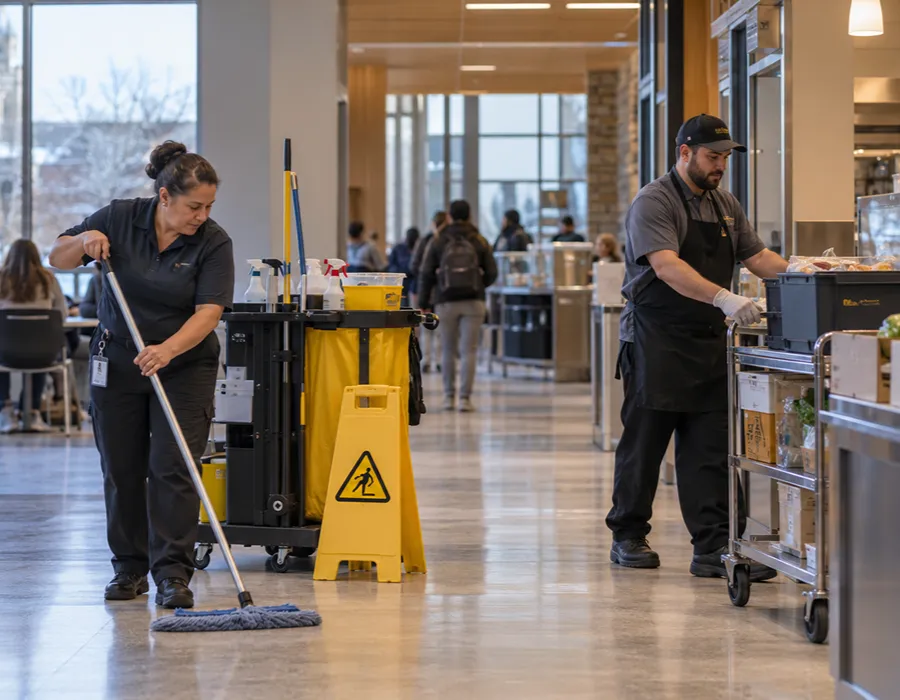
When a kitchen loses two of its six staff to the flu, the remaining four still have to feed everyone. When facilities is down a third of its crew, the floors still need cleaning and the building still needs to run. The work does not shrink to match the smaller team. It gets absorbed by whoever is left, and those people start lifting more, moving faster, skipping breaks, and covering tasks they do not normally do. That is the exact recipe for the strains, slips, and overexertion injuries that drive claims. Illness season, in other words, is quietly a staffing and safety season, and planning for it protects both your operation and your people.
Why Short-Staffing Turns Into Injuries
The connection is straightforward once you look for it. A short-handed team faces the same workload with fewer bodies, and the pressure shows up in predictable ways.
People rush. When one person is doing a job meant for two, they move faster and cut corners, which is when a lift goes wrong or a wet floor gets crossed too quickly. This is the same dynamic behind the “just this once” injuries that happen when someone moves something heavy alone because the usual crew is busy elsewhere.
People take on unfamiliar work. A food service worker pulled onto a task they rarely do, or a staff member covering a role outside their training, is working without the muscle memory and habits that keep experienced people safe.
People skip the recovery that prevents injury. Breaks get shortened, two-person lifts become one-person lifts, and fatigue builds across a long day of covering for absent coworkers. As our look at ergonomics and burnout describes, a worn-down worker is the first to forget safe lifting technique, and tired, rushed workers get hurt more often.
The newest and most fill-in staff absorb the most risk. Temporary help and employees stepping in from other departments have the least familiarity with the equipment and the hazards, and they are often the ones asked to plug the gaps.
Planning Ahead for the Lean Weeks
The good news is that illness season arrives on the same schedule every year, which makes it something you can prepare for rather than scramble through.
Know your thin points before they thin out. Look at which teams run closest to the bone, food service and facilities usually top the list, and think through what happens when each loses a couple of people at once. Your kitchen staff and custodial teams already work in two of the highest-injury environments on campus, and those risks climb when the crews run short. Knowing in advance where coverage gets tight lets you plan instead of react.
Line up coverage in advance. Where you can, identify who can cross-cover, line up reliable temporary help before you need it, and make sure anyone who might step into a role has at least a basic safety briefing for it ahead of time rather than on the fly.
Protect the fundamentals even when you are short. The team-lift rule, the spill cleanup, the break schedule, these are the first things to slip when a crew is stretched, and they are exactly the things that prevent injuries. The same lifting fundamentals that protect staff during any busy stretch matter most when the team is thin. Make clear to supervisors that being short-staffed is a reason to hold the line on safety basics, not to let them go.
Adjust the workload where you can. When a team is genuinely short, some work can wait. Deferring non-urgent tasks during a bad stretch is far cheaper than an injury claim from a crew pushed past what its numbers can safely handle.
Brief your fill-in help. Anyone stepping into an unfamiliar role, whether a temp or a coworker from another department, should get a quick rundown of the equipment, the hazards, and the safe way to do the task before they start. A few minutes up front prevents the injuries that fall on people doing work they are not used to.
The Prevention Side Still Matters
Keeping illness from spreading in the first place is the best way to protect your staffing levels, and the basics are worth reinforcing as the season starts. Encourage staff to stay home when they are sick rather than pushing through and spreading it to the rest of the team, since one person toughing it out can take several coworkers down a few days later. Keep soap, sanitizer, and cleaning supplies stocked and accessible, and give high-touch surfaces extra attention during peak weeks. Make it easy for employees to get a seasonal flu vaccine if they choose to. For a fuller look at how preventive health supports your workforce and your claims picture, our post on healthy employees and lower costs covers the preventive care angle in more depth.
A workforce that stays healthier simply has fewer gaps to cover, which means less of the short-staffed strain that leads to injuries.
The Bottom Line
The flu going around is mostly a wellness and staffing headache. The injuries that come from running your operation short-handed are a workers compensation issue, and they are preventable. By knowing where your coverage gets thin, lining up help before you need it, holding firm on safety fundamentals when crews are stretched, and briefing anyone stepping into unfamiliar work, you protect the people who carry the load through the hardest months of the year. Your operation keeps running, and your staff get through the season in one piece.