
Table of Contents
Related Articles
Shorter Days and Darker Campuses: Keeping Staff Safe as the Light Fades
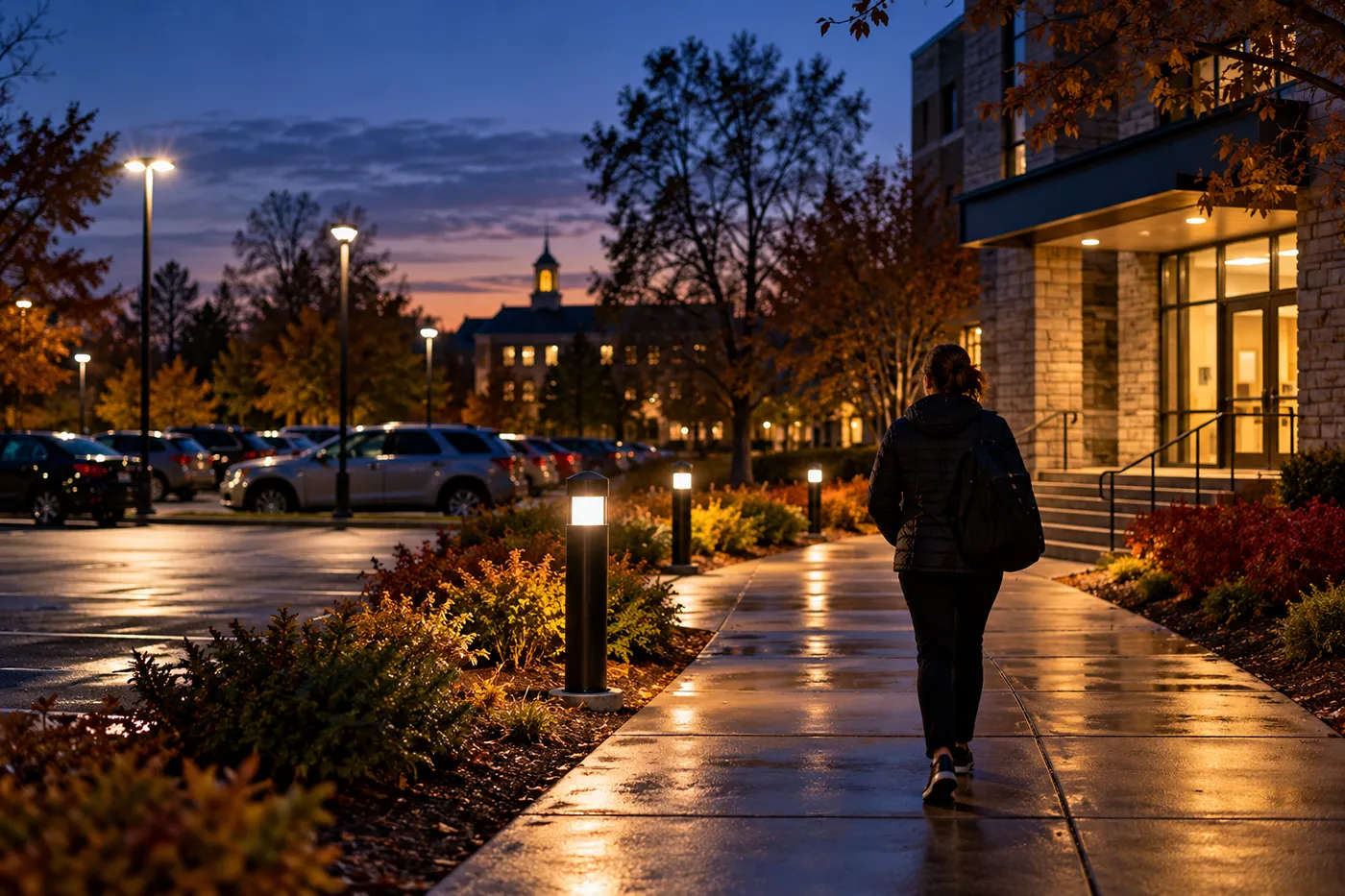
The clocks fall back on November 1 this year, and for weeks before and after that date, the light keeps shrinking on both ends of the day. Staff who arrived in sunshine a month ago are now walking in before sunrise. People who used to leave in daylight are heading to their cars in the dark. For your campus, this is a quiet shift that changes the working conditions for nearly everyone, and it brings a predictable rise in the kind of low-light injuries that are easy to prevent once you are looking for them.
This is different from a sudden power outage, where the lights go out unexpectedly and everyone scrambles. What we are talking about here is the season itself. For a stretch of months, darkness is simply the condition your people work in at the start and end of every shift, and planning for it protects them all winter long.
Why Low Light Raises the Risk
When there is less light, the body has a harder time judging depth, spotting edges, and catching hazards in time to react. A curb that was obvious at noon disappears at dusk. A patch of wet leaves or early ice blends into dark pavement. Uneven ground, a raised threshold, or a cord across a walkway becomes far easier to miss.
The result is more slips, trips, and falls, and they tend to cluster in the exact places people move through in the dark. Parking lots, walkways, stairwells, and building entrances carry the most traffic at the very hours the light is worst.
Where Your Staff Are Most Exposed
A few groups feel this shift more than others, and they are worth thinking about by name.
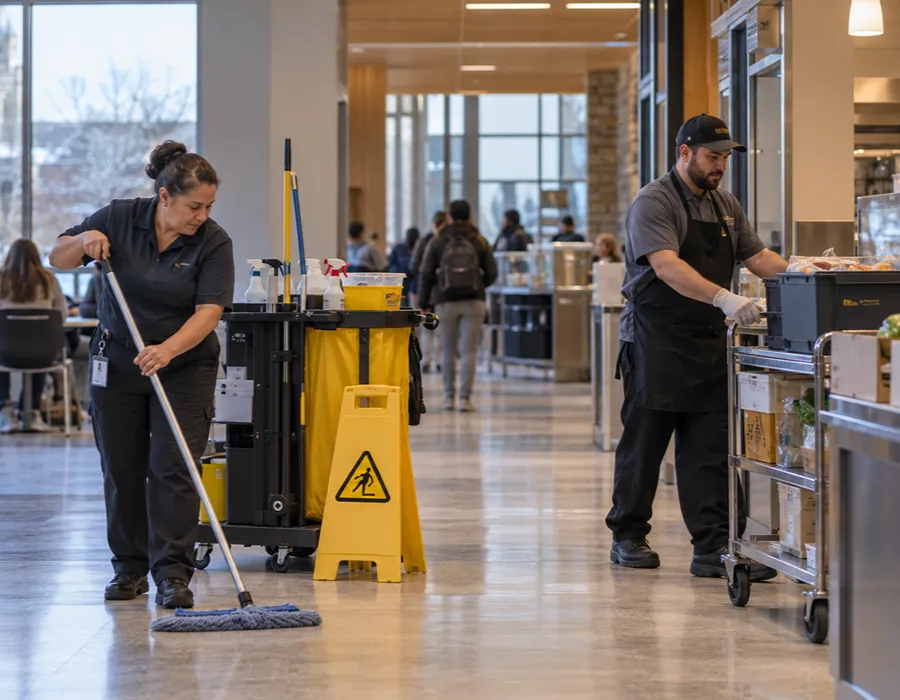
Early and late commuters. The employees who open buildings in the morning and those who close up at night are crossing lots and walkways in full darkness at both ends of the season. Custodial, facilities, and security staff often fall into this group.
Evening event staff. Performances, games, meetings, and community events run well past sunset in the fall and winter. The people setting up, directing traffic, and breaking down afterward are working and walking in the dark, often while carrying equipment.
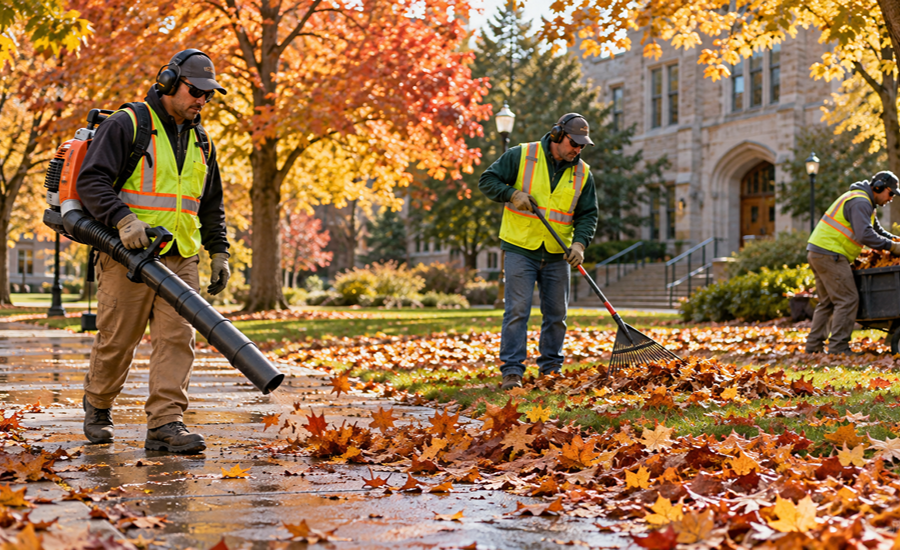
Grounds and outdoor crews. As sunset creeps earlier, outdoor work that used to finish in daylight now wraps up in low light, which adds a visibility hazard on top of the physical demands of the job.
Anyone doing pickup and drop-off. Staff managing student pickup, deliveries, or vehicle traffic are directing movement in conditions where they are hard to see and drivers are struggling to see them.
Practical Steps That Make a Difference
The good news is that low-light risk responds well to straightforward fixes. Here is where to focus.
Start with your lighting. Walk your campus after dark and look at it the way your staff experience it at 5 p.m. in November. Check parking lots, walkways, stairwells, and entrances for burned-out fixtures, dim areas, and shadows. Replacing failed bulbs and upgrading to brighter, more even lighting is one of the highest-value moves you can make, and it is exactly the kind of project the ISCC Health & Safety Grant Program has funded for members, since improving parking lot lighting is a listed use of those grants.
Keep pathways clear and defined. Make sure the routes people actually walk are free of clutter, cords, and obstacles, and that changes in level are easy to see. High-contrast marking on steps, curbs, and thresholds helps the eye catch them when the light is poor.
Make people visible. For staff directing traffic, working outdoors, or moving through lots after dark, reflective vests and good lighting are simple protection. A vest and a flashlight cost very little against the injury they prevent.
Encourage the right footwear. As darkness arrives alongside the first wet and icy mornings, slip resistant footwear matters more than ever, since staff cannot always see the surface they are stepping onto.
Give people a heads up. A brief reminder to staff as the time change approaches goes a long way. Ask them to slow down in lots and on stairs, use lit pathways rather than shortcuts across dark ground, and report any lighting that is out so it gets fixed quickly.
The Bottom Line
The loss of daylight is one of the most predictable changes on the fall calendar, which makes the injuries that come with it some of the easiest to get ahead of. Your staff spend the darkest months starting and ending their days in low light, and a little planning keeps those conditions from turning into slips, falls, and claims. Good lighting, clear pathways, visible staff, and a simple reminder as the clocks change protect your people through the whole season.
As winter weather follows the darkness, our winter safety strategies post picks up the next set of seasonal hazards worth preparing for.
Want a set of eyes on your campus lighting and walkways before the darkest weeks arrive, or curious whether a lighting upgrade qualifies for a Health & Safety Grant? Reach out to the ISCC and FutureComp Safety and Loss Control Team for guidance tailored to your campus.