
Table of Contents
Related Articles

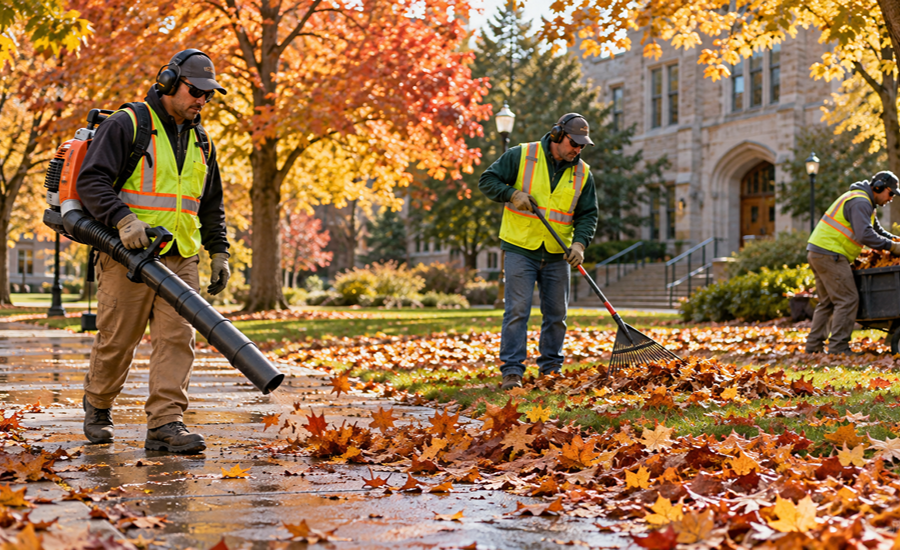

Why Serious Injuries Can Still Happen on Safe Campuses
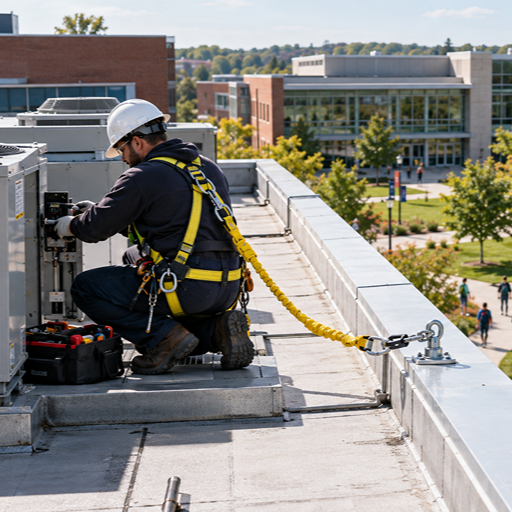
Picture a strong safety year at a member school. Incident numbers are down, training is current, staff wear their protective gear, and the hallways and shops are tidy. Then a maintenance worker falls servicing a rooftop unit, or an electrician takes a shock that should never have reached them. Nothing in the safety log saw it coming. How does that happen on a campus doing so many things right?
It is a question worth sitting with, because the answer points to a gap that even good safety programs can carry. Most of what a strong program tracks, incident counts, housekeeping, gear compliance, does an excellent job on the frequent, lower-severity injuries. The rare but devastating ones sometimes come from a different place. There is a way of looking at risk that some organizations have found helpful for spotting those exposures, and it is worth understanding as one more option in the toolkit, not as a replacement for anything you already do well.
The Limits of Counting Incidents Alone
Safety researchers keep noticing a pattern worth being aware of. An organization’s recordable injury rate can fall for years while its serious injuries hold steady. The reason is that minor injuries, the small cuts and sprains that fill an incident log, do not reliably predict the serious ones. A program that is doing well on the frequent, lower-severity events can still have a blind spot around the conditions behind a rare, life-altering injury.
Part of the challenge is simply how attention works. Research suggests that during pre-job planning, people naturally spot fewer than half of the hazards actually present. The obvious ones get caught. The quiet, high-stakes ones are easier to miss. None of this means a traditional program is failing. It means there may be room to add a sharper look at the most dangerous exposures, for institutions that want one.
A Complementary Question to Ask
One approach that some safety teams have adopted is energy-based safety, framed well in a recent article by Brady Keene of StepoAI. The premise is intuitive once you hear it: every serious injury happens when a person makes contact with a source of high energy. A fall is gravity doing work on the body. A shock is electrical energy. A burn is thermal energy. A crush is mechanical force.
Viewed that way, a program can ask a sharper pair of questions alongside its usual routines. Where is the dangerous energy in a given task, and is anything reliable keeping people separated from it? It is not a replacement for incident tracking or your existing hazard checks. It is an additional lens that can help serious exposures surface before they cause harm, and members are free to borrow as much or as little of it as fits their operation.
Finding the Energy in Your Own Buildings
What makes this lens approachable is a simple field tool called the Energy Wheel, developed through the research behind energy-based safety. It organizes hazardous energy into ten common categories, giving staff a prompt to run through rather than relying on memory or instinct alone.
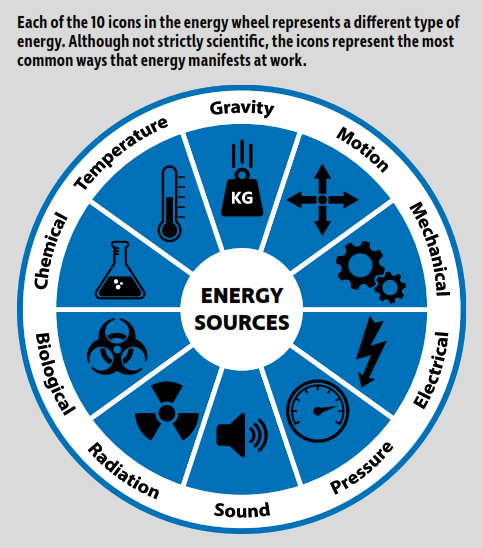
The Energy Wheel organizes hazardous energy into ten categories. Though the icons are practical rather than strictly scientific, they capture the most common ways energy shows up at work. Source: Safety Function.
The value is in the prompt itself. People readily catch the obvious hazards, like gravity at an edge or motion from equipment, while the less visible ones, such as stored pressure or a chemical exposure, are easier to overlook. Running through the full wheel helps surface those hidden sources. Keene’s article notes that using the Energy Wheel in pre-job briefings has been shown to improve hazard recognition by roughly 30 percent, with the largest gains on exactly those overlooked energy types.
For a member campus, the categories that come up most tend to cluster in familiar places. Facilities and maintenance work carries several at once, from gravity during rooftop and ladder work to electrical energy in wiring and powered equipment to stored mechanical energy in machines being serviced. Kitchens concentrate thermal energy in fryers, steam, and hot surfaces alongside mechanical energy in slicers and mixers. Grounds and event work brings motion hazards from vehicles, mowers, and heavy mobile equipment. Pools, labs, and cleaning operations add chemical energy. Theater and exhibition spaces combine work at height with high-intensity electrical systems. For institutions that want the deeper research behind the approach, Safety Function’s overview of energy-based safety is a useful starting point.
The Test That Matters: Would the Control Survive a Mistake?
Spotting the energy is one half of the picture. The other is what stands between that energy and your staff, and whether it would hold up on a bad day.
The approach draws a useful line between two kinds of safeguards. The stronger kind, which Keene calls a direct control, targets the hazard itself and keeps working even when a person makes a mistake. A guard that physically blocks a blade. A fall arrest system that catches a worker who slips. A lockout step that removes power before anyone reaches into a machine. The weaker kind depends on people behaving perfectly every time: a warning sign, a verbal reminder, a line in a training session. All of these have their place, but the reminders fail the instant attention wanders.
That distinction gives a team a plain question to run on its most serious hazards. Is a real control physically separating our people from this energy, or are we relying on everyone to be careful forever? Wherever the honest answer is the second one, there may be a worthwhile fix to consider.
Making It a Habit, Not a Project
For members who choose to try it, none of this requires scrapping a current program or adopting heavy new paperwork. The most practical version is a short mental routine a supervisor or facilities lead can run before high-risk work begins. Name the energy in the task. Describe what is keeping people away from it. Confirm that the control is actually in place and working, not just assumed. Then decide who owns checking it, and revisit the moment conditions change.
Used consistently, that rhythm can quietly reshape how a team sees risk. It also gives everyone, from frontline staff to leadership, a shared and simple language for talking about the hazards that can truly hurt someone, rather than lumping a loose extension cord in with a live electrical panel as if they carried the same stakes.
What Members Might Gain by Folding It In
The value of this lens shows up when it sits alongside what you already do, not in place of it. A few benefits make it worth considering for institutions that want an additional layer.
It can catch what current checks miss. Your existing program handles the frequent, lower-severity injuries well. The energy lens aims fresh attention at the rare, high-severity exposures that routine walkthroughs sometimes glide past, which are the ones that drive catastrophic claims and lasting harm to staff.
It can sharpen where safety dollars go. Most institutions have a longer list of fixes than budget to cover them. Ranking hazards by the energy behind them offers a defensible way to sequence spending, so engineering controls land first on the exposures that could seriously hurt someone. That same logic can strengthen a Health & Safety Grant request, since it ties the ask directly to serious injury prevention. Projects like machine guarding, fall protection systems, and electrical safeguards are exactly the kind of direct controls the program can help fund.
It layers onto routines you already run. Pre-task huddles, safety committee walks, and new-hire orientation can all absorb the energy lens easily. The same meeting you already hold simply adds a question: where is the dangerous energy, and what is reliably separating people from it.
It builds a shared language. When facilities staff, supervisors, and leadership describe hazards the same way, serious risk gets discussed consistently instead of case by case. That common vocabulary makes it easier to flag concerns, justify fixes, and keep attention on the exposures that matter most.
It can reinforce the safety culture you are already building. Teaching staff to name the energy in their own work turns hazard spotting into something active and owned. Over time, that is part of what separates a campus that looks safe from one that genuinely is.
Trying it out is low effort. A member could introduce the idea at a safety committee meeting, test the energy questions on one or two high-risk tasks, and build from there if it proves useful. Your ISCC and FutureComp loss control team is glad to help apply it to the specific work on your campus.
The Bottom Line
A safe-looking campus and a genuinely safe one are not always the same thing, and the difference often lives in the handful of high-energy hazards that routine safety checks can miss. Energy-based safety is not a requirement or a replacement for a working program. For members who want an additional tool, learning to see the energy in the work, asking whether a control would hold up even when people err, and aiming resources at the exposures with the most force behind them can be a valuable complement to an already strong safety effort.
The framing here draws on a helpful article, Energy-Based Safety: Seeing Hazards Through the Lens of Energy, with the Energy Wheel and supporting research developed by Safety Function. Both are worth a read for anyone who wants to go further.
Curious whether the energy lens fits your campus? Reach out to the ISCC and FutureComp Safety and Loss Control Team to talk through where it might complement what you already have in place.