
Table of Contents
Related Articles

Fall Grounds Work: Keeping Your Maintenance Crews Safe Through Leaf Season
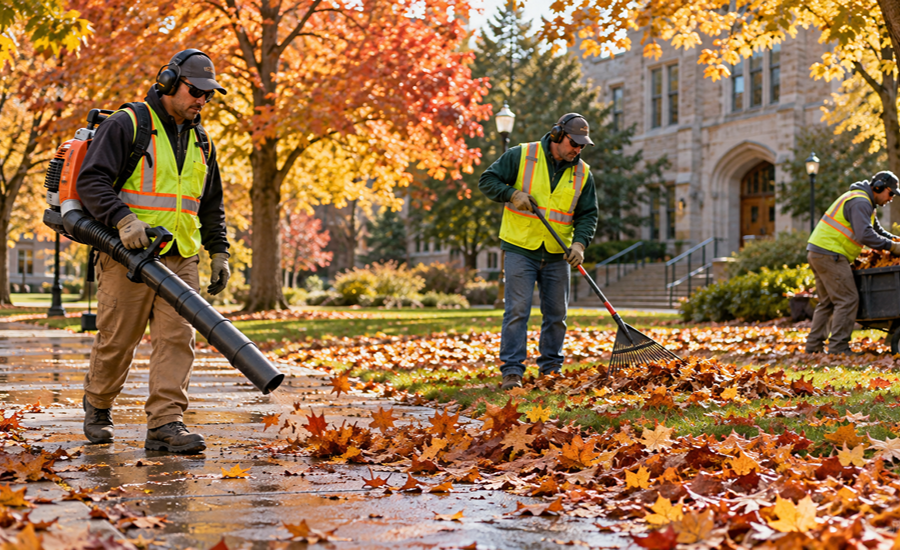
Once the leaves start falling, your grounds and maintenance staff move into one of the busiest stretches of their year. A campus full of mature trees generates weeks of cleanup, from late September through November, and the crews handling it are running equipment, hauling loads, and covering a lot of ground while the weather steadily turns colder and wetter. It is demanding physical work, and it comes with a familiar set of injuries when the right precautions are not in place.
Most fall cleanup advice out there is written for homeowners tackling their own yards on a Saturday. Your staff are doing this all day, every day, across large properties, which raises both the scale of the exposure and the stakes if someone gets hurt. A little attention to the season now keeps your people healthy and keeps those claims off your record.
Where the Injuries Come From
Fall grounds work brings together a handful of predictable risks. Knowing them helps you put your effort where it matters.
Repetitive strain. Hours of raking, blowing, and hauling loaded tarps put steady stress on the back, shoulders, and wrists. A leaf blower adds vibration and the strain of carrying a unit for long stretches. These are the sprains and strains that build quietly over a long season rather than announcing themselves all at once.
Slips and falls on wet leaves. A layer of wet leaves on pavement, stairs, or a slope is slick, and it hides whatever is underneath it. Crews walking with a load or carrying equipment across leaf-covered surfaces are the ones most likely to go down.
Equipment injuries. Mowers, blowers, chippers, and trimmers cause lacerations and thrown-object injuries when they are rushed or run without guards. Reaching into a clogged chute or a jammed blade is one of the most dangerous moves on the whole job.
Noise and flying debris. Gas powered blowers and mowers run loud enough to damage hearing over a full day, and they throw sticks, stones, and grit that threaten unprotected eyes.
The turn toward winter. As the season goes on, cold muscles strain more easily, early frost adds a slick layer to leaves and walkways, and shorter days leave crews working in lower light.
Running the Equipment Safely
Powered equipment does the heavy lifting of fall cleanup, and it deserves respect every time it starts up. The fundamentals are simple, and they hold up whether the operator has been on the crew for twenty years or twenty days. For a deeper look at safe operation of mowers, trimmers, and utility vehicles, our post on athletic facility staff safety covers field equipment in detail.
Train every operator on each machine they run, and put that training in place before the busy weeks rather than in the middle of them. Walk each piece of equipment before it starts, checking guards, blades, cords, and controls, and pull anything damaged out of service until it is fixed. Confirm guards and shields are on and working, since they are there to stop exactly the injuries that fall cleanup produces.
The single most important habit is this one. Shut the machine off and wait for all moving parts to stop before clearing a clog, a jam, or a wrap of wet leaves. Every time, no exceptions. Most severe equipment injuries happen when someone reaches toward a part that is still moving.
Keep blades sharp, because dull blades make both the machine and the operator work harder. Refuel gas equipment only after it has cooled, and store fuel properly. And give crews the right footwear for the job, since sturdy, slip resistant boots matter as much around mowers and blowers as they do on wet steps.
Protecting the People Doing the Work
The rest of the season comes down to protecting bodies from the wear that fall work piles on.
Warm up and rotate. A few minutes of stretching before the crew starts pays off for backs and shoulders, and rotating people between raking, blowing, and hauling keeps any one muscle group from carrying the full day.
Use good technique and the right tools. Raking upright and pulling with the arms and legs, rather than twisting the back, takes real pressure off the spine. Loading lighter tarps and moving heavy piles with carts keeps the weight off people. Our post on lifting smarter, not harder walks through the fundamentals worth reinforcing with crews this time of year. If your crews could use ergonomic tools or better handling equipment, the ISCC Health & Safety Grant Program has funded this kind of purchase for members before.
Make eye and hearing protection standard. Safety glasses and hearing protection are not optional for blower and mower work. Issue them, expect them, and enforce them, because damage to hearing and eyes is cumulative and does not undo itself.
Stay ahead of wet and cold conditions. Clear wet leaves off walkways, stairs, and entrances promptly, since those are the spots where a slip becomes a fall for staff and visitors alike. As the temperature drops, give crews time to warm up, watch footing on frosty mornings, and keep anyone working in low light visible. As the season turns toward snow and ice, our winter safety strategies post picks up where fall cleanup leaves off.
Brief your seasonal help. Extra hands brought on for leaf season usually have the least experience with your equipment and your expectations. A short safety briefing before they start, covering the machines, the protective gear, and safe lifting, heads off the injuries that tend to land on the newest people.
The Bottom Line
Leaf season arrives on schedule every year, which is exactly why the injuries that come with it are so preventable. Your grounds and maintenance crews take on hard physical work in changing conditions for weeks at a stretch, and a bit of planning carries them through it safely. Solid equipment habits, the right protective gear, sensible lifting, and quick attention to wet and icy surfaces protect your people and keep your fall season running smoothly.
Want a review of your grounds safety program, or curious whether equipment qualifies for a Health & Safety Grant? Reach out to the ISCC and FutureComp Safety and Loss Control Team for guidance tailored to your campus.