
Table of Contents
Related Articles
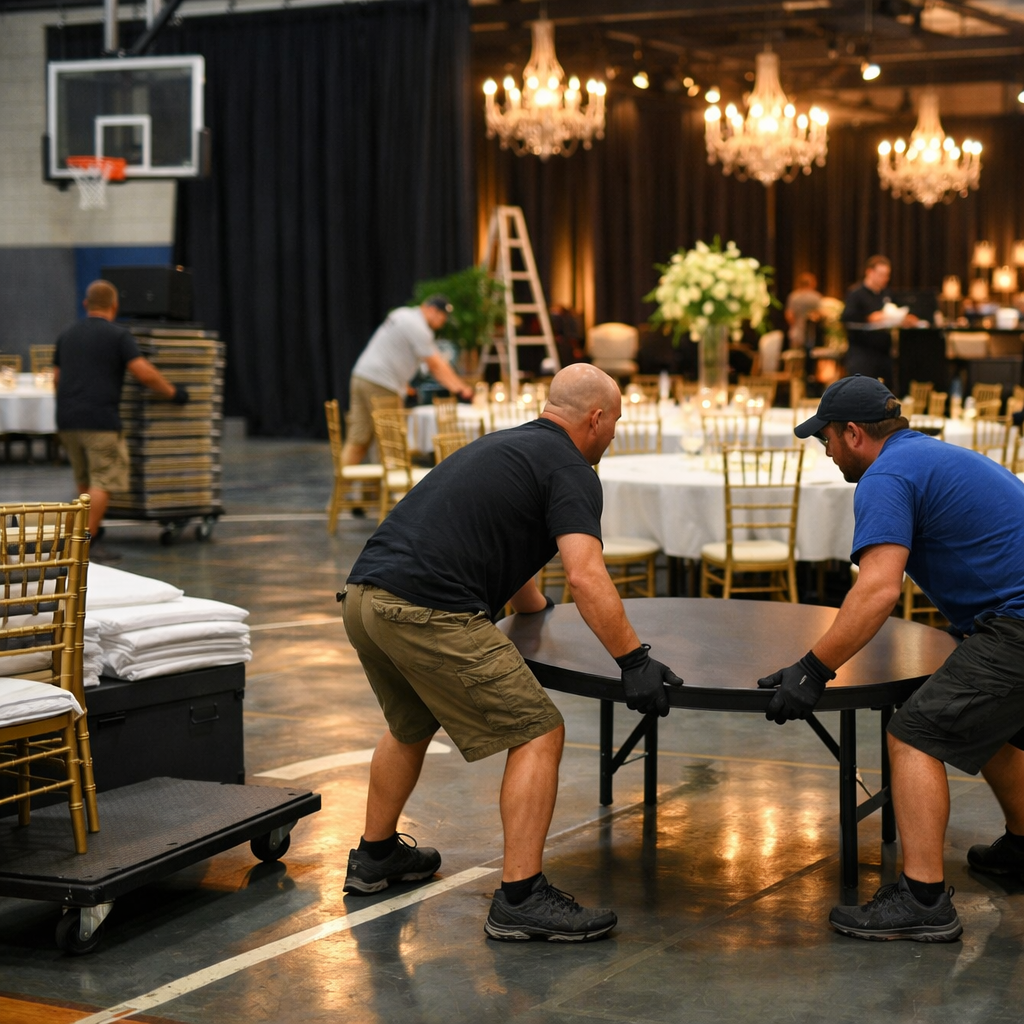


Beyond Impact: Understanding & Preventing Struck-By and Struck-Against Injuries on Campus
For years, the “big three” of school safety have been slips, trips, and falls. We’ve spent decades improving the use of wet floor signs, innovative temperature-sensitive warning signage, proactive/reactive snow removal techniques, and employee footwear programs.
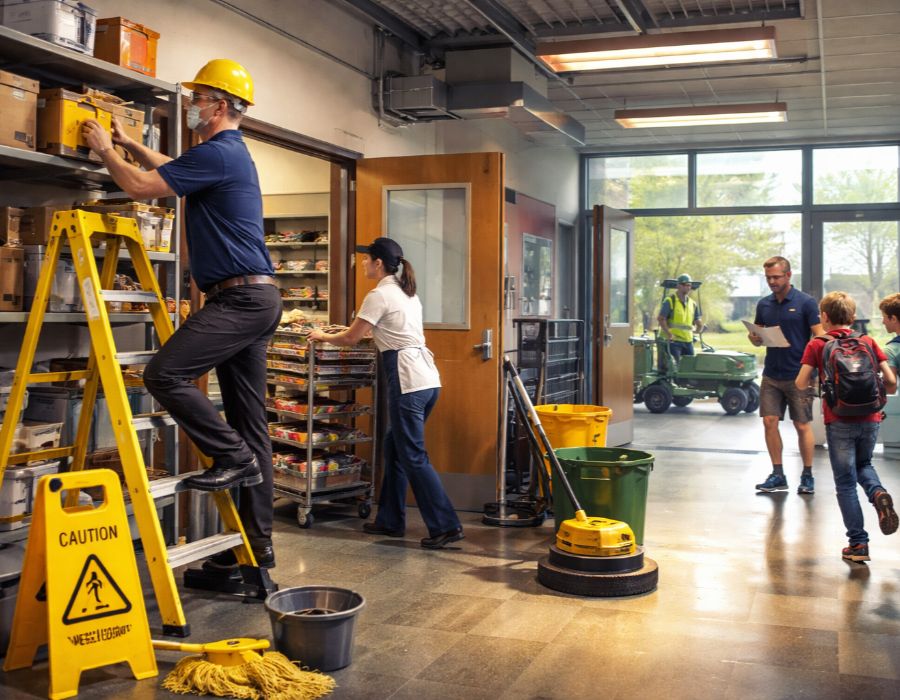
With busy hallways, active learning spaces, kitchens, athletics, and frequent storage handling, employees are regularly exposed to falling objects, shifting equipment, low-clearance structures, and accidental contact with students and staff.
Where These Injuries Happen: High-Frequency “Impact Zones”
- Storage Areas, Kitchens, Dining Halls & Stock Rooms
The largest share of injuries involve falling or shifting objects; pans, boxes, racks, bins, shelving contents, dish carts, or equipment that slips or drops during routine handling. These areas often combine vertical storage, tight spaces, and awkward reaching, making staff more vulnerable to items falling from above or shifting unexpectedly. - Overhead & Low-Clearance Hazards
A major portion of injuries occur when staff stand up under shelves, ladders, stairways, elevated work hazards, walk through low doorways, or encounter ceiling-mounted pipes, beams, ductwork, or equipment. Head and facial injuries dominate this category, a serious severity driver. - Doors, Gates, Drawers & Windows
Cooler doors, gate arms, half-closed cafeteria gates, malfunctioning drawers, and swinging doors frequently strike employees in the head, hands, knees, or torso. These events are especially common during busy kitchen or custodial routines, where equipment is frequently opened, closed, and moved. - Person-to-Person Contact & Recreation/Camps
Students, campers, or coworkers unintentionally collide with staff, particularly in hallways, gyms, classrooms, playgrounds, and special education environments. These incidents often result in head strikes, facial injuries, or shoulder/back impact and remain a meaningful contributor to severity. - Carts, Mowers & Mobile Equipment
Grounds work, event setup, and parking-lot activity produce injuries where mowers, carts, gators, or bikes contact the lower extremities or run over toes/feet. This category peaks in warmer months. - Tools & Equipment Kickback
Table saw kickback, drill or router recoil, parts under tension releasing, and tool-related projectiles create high-energy impacts. While less frequent, these incidents tend to involve the hands, eyes, or head and carry high severity potential.

Turning Awareness Into Prevention
Based on the frequency and circumstances in the data, the following controls directly target your highest-risk conditions:
- Reduce High-Shelf & Overhead Storage
- Move heavy items below shoulder height.
- Add step stools and ensure staff can access them quickly.
- Reorganize crowded kitchen and storage racks to prevent slip-release of pans, boxes, and trays.
- Address Low-Clearance Hazards
- Mark low doorways, pipes, and beams with high-contrast identifiers.
- Add padding on common impact points.
- Require bump caps for maintenance, theater, AV, and facilities staff frequently working in tight spaces
- Secure Doors, Gates, Drawers, and Boarding Areas
- Maintain cooler/freezer door closers.
- Avoid “ducking under” half-closed gates.
- Enforce “clear the swing zone” habits in Dining & Kitchen Operations
- Create standard operating procedures for areas with heavy door use.
- Manage Campus Movement Risks
- Set hallway traffic norms during dismissals and transitions.
- Athletics & Recreation Precautions
- Establish sideline buffer zones.
- Reinforce safe staff positioning during active play and practice drills.
- Tools & Kickback Hazards
- Require eye/face protection when working with saws, routers, drills, or tensioned parts.
- Conduct pre-use tool inspections for guards, fences, and kickback pawls.
The ISCC Advantage
Struck-by and struck-against claims can carry higher medical complexity and greater lost time, particularly when the head or face is involved. But by addressing the consistent patterns highlighted above—storage practices, overhead hazards, door/gate mechanics, student interactions, seasonal grounds activity, and tool use—schools can significantly reduce both frequency and severity.
Safety is not just about what’s under your feet, it’s about everything moving around you.