Table of Contents
Related Articles
The Event Flip: Staying Safe During the High-Speed Campus Transition
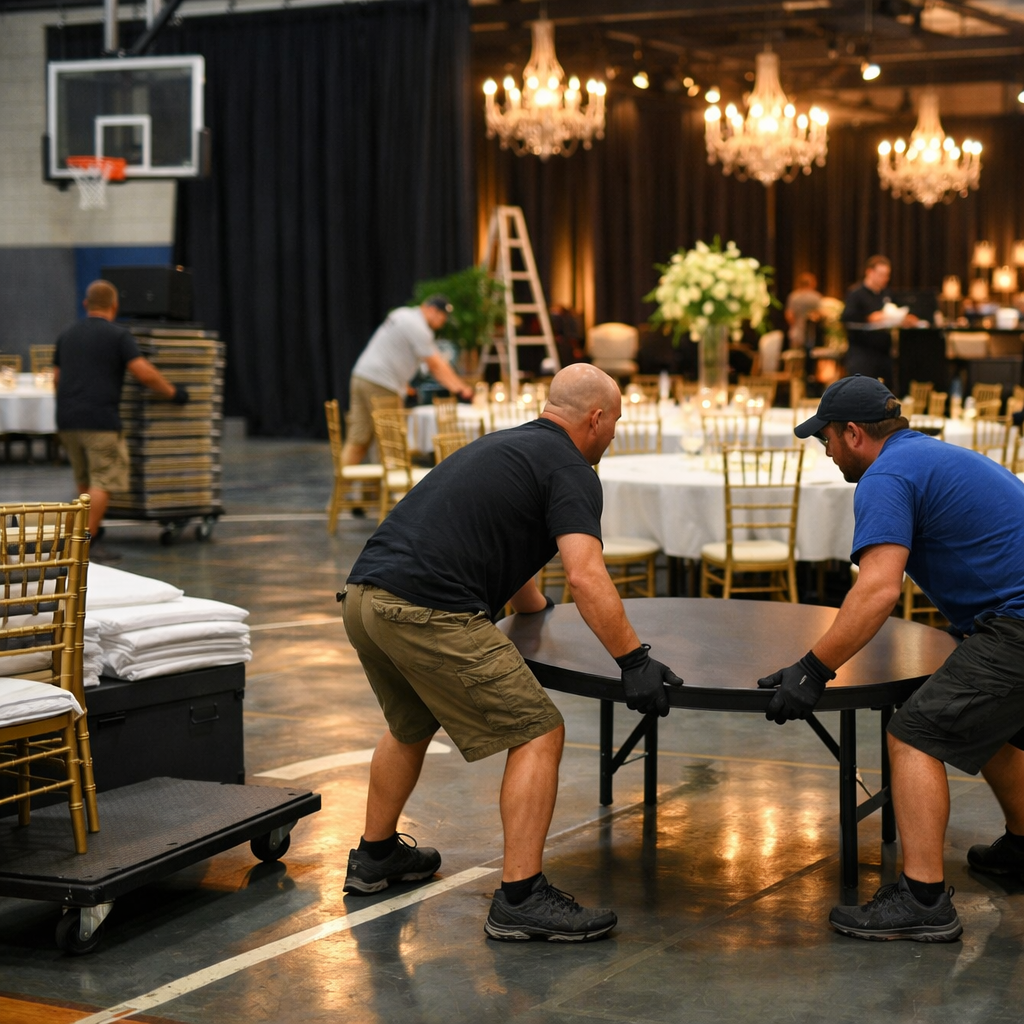
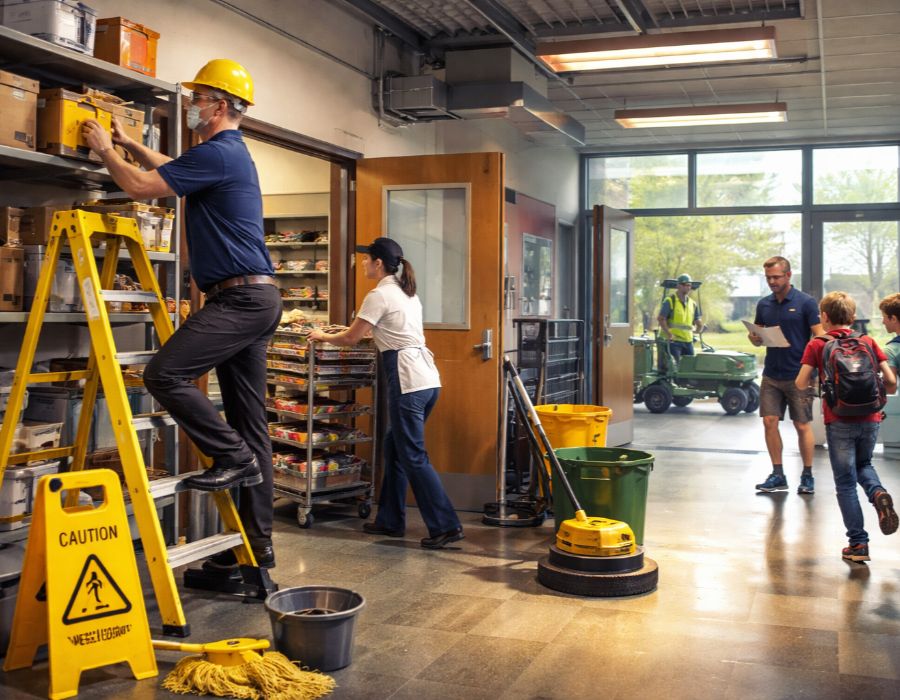
If you work in an independent school or a cultural institution, you know the drill. At 3:00 PM, the gymnasium is a basketball court. By 6:00 PM, it needs to be a gala hall with seating for three hundred people. These “event flips” are the magic trick that keeps our institutions running, but they are also some of the highest-risk windows for workplace injuries.
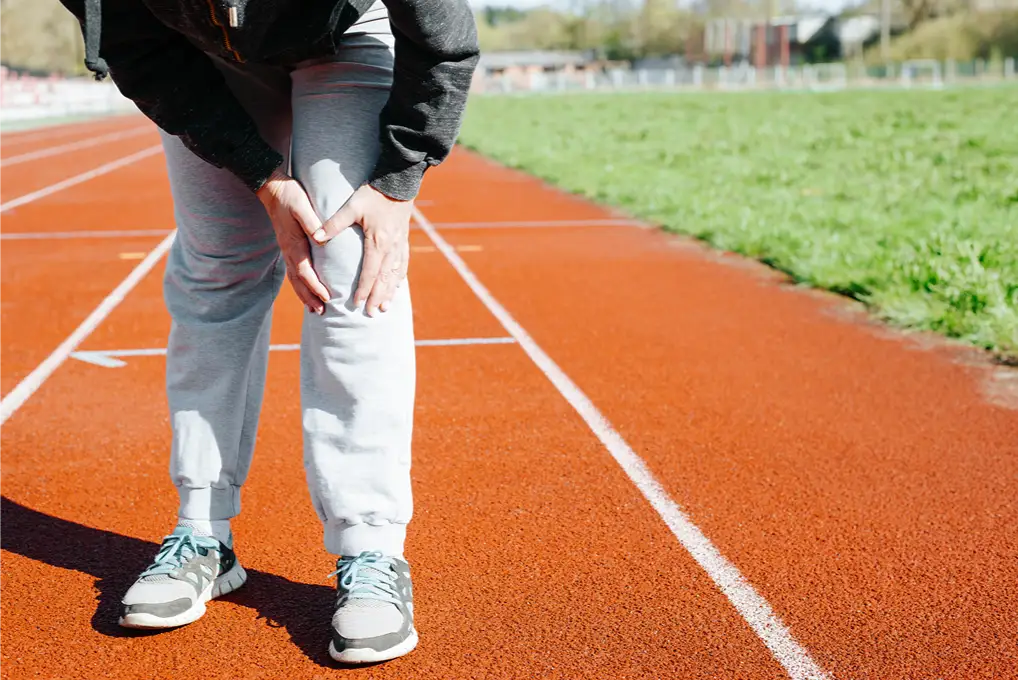
When a deadline is looming and the show must go on, safety protocols often take a backseat to speed. Sometimes, we see the results in the form of pulled muscles, strained backs, and crushed fingers. Protecting your team during these rapid transitions isn’t just about working harder; it’s about managing the physical energy of the room.
The Danger of the “Just This Once” Mentality
Most overexertion injuries don’t happen during a massive construction project. They happen when a faculty member or an administrative assistant decides to move a heavy stack of chairs “just this once” because the facilities team is busy elsewhere.
When we are rushed, our bodies compensate by using smaller, weaker muscles instead of our legs and core. We twist while carrying a heavy podium. We reach too far across a table to straighten a linen. These micro-moments of poor mechanics add up. By the time the event starts, your staff might be smiling for the donors, but they are often one wrong move away from a multi-week workers’ compensation claim.
Strategies for a Safer Transition
To reduce the physical toll of these quick turnarounds, institutions should look at the process as a coordinated athletic event rather than a mad dash.
- The Two-Person Mandate: Establish a hard rule that certain items such as stages, heavy banquet tables, or large planters, are never moved by a single person, regardless of how “strong” they feel. This isn’t just about weight; it’s about the awkward dimensions that force a person out of a safe lifting posture.
- Staging Your Tools: If your team has to hunt for dollies or carts, they will eventually give up and carry the items by hand. Keep your moving equipment serviced and positioned exactly where the “flip” is happening.
- The Five-Minute Brief: Before the chaos begins, gather everyone for a quick huddle. Identify who is leading the move and point out specific hazards like trailing cables or slick floors. This resets the “situational awareness” that often disappears when people are stressed.
Factoring in the Human Element
We also have to acknowledge that many of the people helping with these events aren’t professional movers. They are admissions officers, teachers, and curators who have already worked a full day. Fatigue is the primary driver of accidents.
Ensuring that staff have access to water and a quick seated break during a three-hour setup can actually speed up the process by preventing the mental fog that leads to mistakes. If you are hiring temporary staff to assist with these peaks in activity, utilizing the ISCC POPE (Post-Offer Pre-Employment) exams is a brilliant way to ensure they are physically capable of the specific demands of event logistics.
Why the “Flip” Matters to the ISCC Community
At the end of the day, a successful event shouldn’t come at the cost of a staff member’s health. At ISCC, our mission is to help you maintain a stable, safe environment so you can focus on your educational or cultural goals. By professionalizing the way we handle these rapid transitions, we keep our experienced staff on the floor and out of the doctor’s office.
Safety isn’t a hurdle to a great event; it is the foundation that makes the event possible.