
Table of Contents
Related Articles
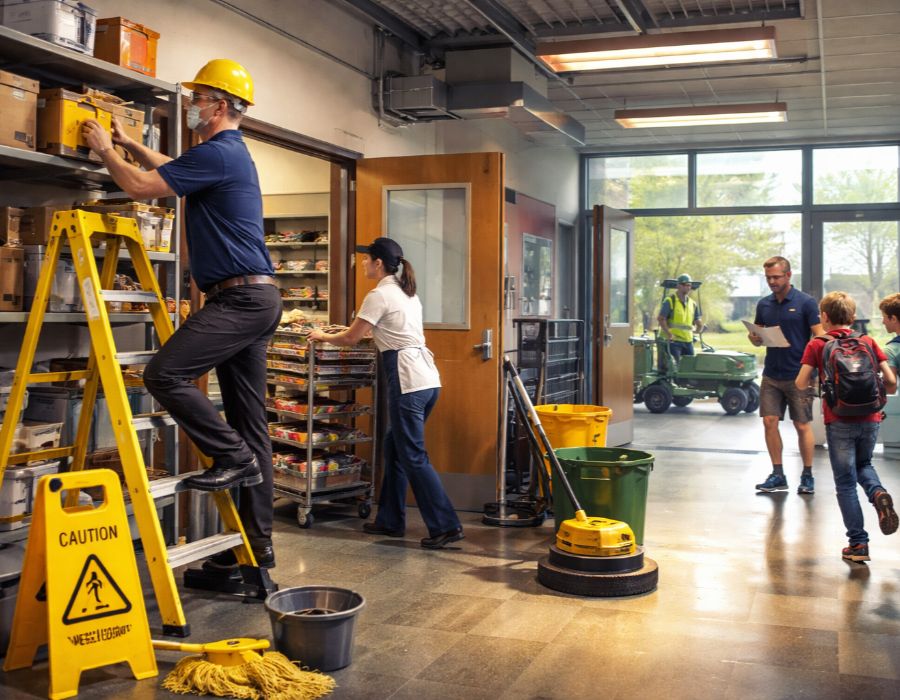


Fall Prevention in Educational Settings: Protecting Staff from Ladder, Stairway, and Elevated Work Hazards

Changing a light bulb in the auditorium. Hanging decorations for graduation. Accessing storage in the library. Adjusting theater lighting. These routine tasks put your staff at risk for fall-related injuries that result in serious harm and significant workers compensation costs.
Fall protection is the #1 most frequently cited OSHA standard violation, and approximately 20% of fall injuries in workplaces involve ladders, with that number jumping to 81% among construction workers treated in emergency rooms.
The Cost Of Fall Injuries
Work-related ladder fall injuries result in over 100 fatalities annually and more than 22,000 nonfatal injuries requiring days away from work. Fall injuries average $50,000-$55,000 in direct workers compensation costs per claim. For ISCC members, each serious fall can significantly impact your experience modification rate and even the reputation of an institution.
Why Falls Happen
About 40% of ladder incidents involve a ladder sliding out at the base from an incorrect setup angle. The five primary causes are incorrect setup, wrong ladder selection, lack of maintenance, improper use (like carrying materials while climbing), and environmental factors.
Ladder Safety Essentials
Selection & Inspection
Choose ladders based on the task, location, and load. Every ladder has a duty rating, and never exceed it when accounting for worker weight plus tools and materials.
Before each use, inspect for:
- Cracked, bent, or broken rungs and rails
- Loose or missing hardware
- Damaged safety feet
- Slippery substances on rungs
- Proper functioning of locks and spreaders
Tag and remove damaged ladders immediately.
American Ladder Institute Safety Resources
Safe Use Requirements
Extension ladders should be set up at approximately a 75-degree angle. 62% of ladder accidents involved workers carrying materials while climbing, compromising their three points of contact.
Critical rules:
- Maintain three points of contact when climbing (two hands and one foot, or two feet and one hand)
- Never stand on the top two rungs of a step ladder or top three rungs of an extension ladder
- Never lean beyond the ladder’s side rails; move the ladder instead
- Use tool belts or ropes to hoist materials after reaching your working position
- Avoid metal ladders near electrical work
NIOSH Ladder Safety App (free for iOS and Android)
Stairway Hazards: The Overlooked Risk
65% of fall-related injuries occur from same-level walking surfaces. Educational institutions face unique stairway challenges: high traffic volume, older buildings with inconsistent stair dimensions, and varying conditions throughout the day.
Common Stairway Hazards
- Inconsistent riser heights: Even small variations cause trips
- Worn or missing handrails: Must extend full length and be securely mounted
- Poor lighting: Creates shadows and trip hazards
- Clutter: Storage items or equipment on stairs
- Slippery surfaces: From weather, spills, or cleaning
- Faded edge marking: Hard to judge depth in varying light
Required Safety Features
- Handrails on both sides for stairs wider than 44 inches
- Consistent tread depth and riser height within each stairway
- Non-slip surfaces on all stairs, especially exterior
- Adequate lighting with no shadows on treads
- Clear markings for top and bottom steps
Elevated Work Beyond Ladders
Theater and Stage Work: Rigging, lighting, and catwalk access require specialized fall protection including personal fall arrest systems for work above six feet.
Library Rolling Ladders: Must have locking mechanisms, proper track maintenance, weight capacity ratings posted, and regular inspection.
Roof Access: Requires ladders extending 3 feet above roof line, fall protection systems for flat roofs, and weather-appropriate work timing.
Training Requirements
OSHA mandates that employers provide training for each employee who might be exposed to fall hazards.
Required topics:
- Recognizing fall hazards
- Proper ladder and stairway use procedures
- Equipment selection, inspection, and use
- Maximum load capacities
- Proper setup angles and placement
- Emergency procedures
Training schedule:
- Initial training before any elevated work
- Retraining when equipment or procedures change
- Annual refresher training for all staff
- Immediate retraining after near-misses or incidents
Document all training with signatures and dates.
Special Considerations for Schools
Multiple Building Users: Establish clear policies on who is authorized to use ladders and what tasks require facilities staff.
Student Workers: Restrict elevated work. Never assign students to work above six feet.
Seasonal Demands: Plan ahead for holiday decorations, graduation setup, and summer maintenance with adequate staff and realistic timelines.
Historic Buildings: Non-standard stairs and irregular ceiling heights require extra hazard assessment.
Your Action Plan
This Week:
- Inspect all ladders and tag damaged equipment for removal
- Walk through stairways identifying hazards
- Verify handrails are secure
- Check fall protection equipment accessibility
This Month:
- Conduct ladder safety training for all staff
- Create approved ladder user list and authorization process
- Install non-slip treads where needed
- Review incident reports for fall-related near-misses
This Quarter:
- Develop written fall protection procedures
- Inventory all elevated work areas
- Schedule annual ladder inspections and create replacement budget
- Update job descriptions to include fall hazard training requirements
The Bottom Line
A quality extension ladder costs $250-$400. A serious fall injury averages $50,000-$55,000 in direct workers compensation costs, plus additional expenses for investigation, replacement labor, and increased insurance premiums.
Falls from ladders, stairways, and elevated work represent one of the most preventable injury categories in educational settings. Proper equipment selection, regular inspection, comprehensive training, and enforced safe work procedures protect your staff while reducing workers compensation exposure.
Need assistance developing a fall prevention program for your campus? Contact the ISCC / FutureComp Service Team to schedule a site assessment and receive customized recommendations.