
Table of Contents
Related Articles

Safety in the Modern Lab: Navigating the New Risks of Makerspaces
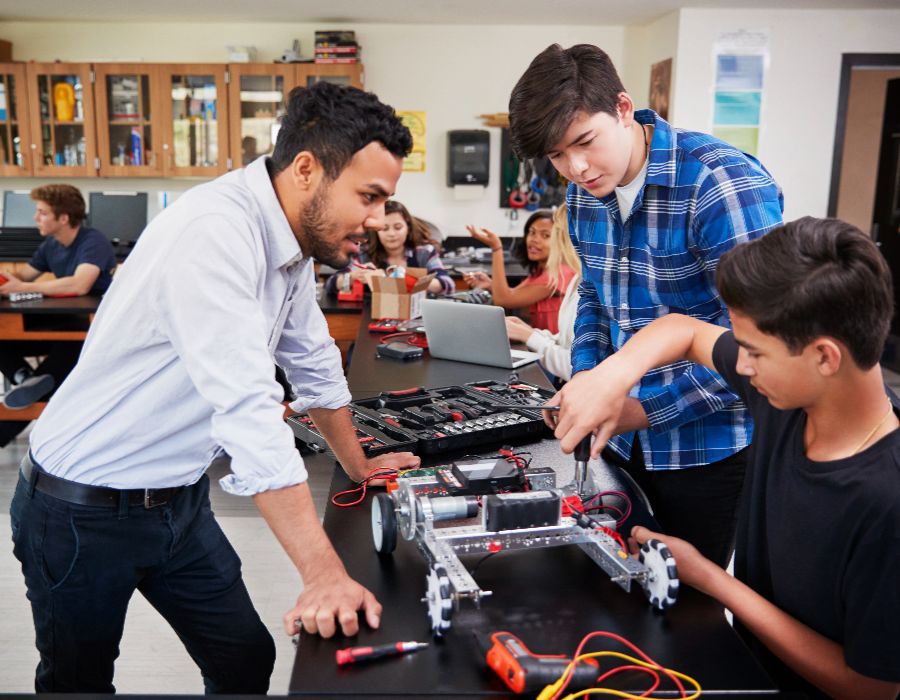
The traditional classroom is undergoing a massive transformation. Across our independent schools and cultural centers, we are seeing the rise of Makerspaces and STEAM labs—vibrant hubs filled with 3D printers, laser cutters, and robotics kits. These spaces are incredible for student engagement, but they also bring industrial-grade hazards into an academic setting.
For the faculty members leading these programs, the shift can be daunting. Many educators moving into these roles were trained in traditional sciences or the arts, not industrial safety. Protecting your staff in these environments requires looking past the excitement of the technology to address the “invisible science” of the risks involved.
Managing Air Quality and Micro-Particles
One of the most overlooked hazards in a modern STEAM lab is what we cannot see. 3D printers, while fascinating to watch, often emit ultra-fine particles and volatile organic compounds during the heating process. Without proper ventilation, faculty members spending six to eight hours a day in these rooms are at risk for respiratory irritation or long term health complications.
Laser cutters pose a similar challenge. Even when cutting safe materials like plywood or acrylic, the process creates concentrated smoke and fumes. It is essential that these machines are not just plugged in, but properly vented to the outdoors. Relying on a standard classroom HVAC system is rarely enough. At ISCC, we encourage members to perform air quality audits in these specific zones to ensure that the “innovation” isn’t compromising the health of the educator.
The Transition from Classroom to Shop Mindset
In a history or math classroom, the primary safety concerns are usually ergonomic or related to trip hazards. In a Makerspace, the mindset must shift toward light industrial standards. This includes:
- High-Heat Awareness: Soldering irons and 3D printer nozzles can reach temperatures that cause instant third-degree burns. Faculty need dedicated heat-resistant workstations and clear protocols for when a machine is “hot” even after it has been turned off.
- Mechanical Safety: Even small-scale CNC routers or robotic arms have pinch points and moving parts that can snag clothing or hair. Providing staff with the right personal protective equipment, such as proper eye protection and fitted clothing, is a non-negotiable first line of defense.
- Chemical Management: Resin-based printers and specialized adhesives introduce a new layer of chemical handling. Proper storage and the availability of Material Safety Data Sheets (MSDS) are just as important in the tech lab as they are in the chemistry prep room.
Empowering Faculty Through Training
The most effective way to prevent a workers’ compensation claim in a Makerspace is to invest in specialized training for the staff. We cannot assume that a faculty member is comfortable with high-voltage equipment or power tools just because they are tech-savvy.
By creating a safety first culture, schools can ensure that educators feel empowered to stop a project if a machine is malfunctioning or if the environment feels unsafe. This proactive approach not only protects the individual but also safeguards the institution from the high costs associated with specialized medical claims and lost instructional time.
The ISCC Partnership in Innovation
At ISCC, we are proud to support the forward-thinking programs of our member institutions. As your curriculum evolves, your safety protocols must keep pace. By identifying these “invisible” risks now, we can work together to ensure that your Makerspaces remain centers of creativity rather than sources of injury. When the staff feels safe and supported, the real magic of STEAM education can happen without interruption.